

 281-466-2236
 sales@castledoors.net
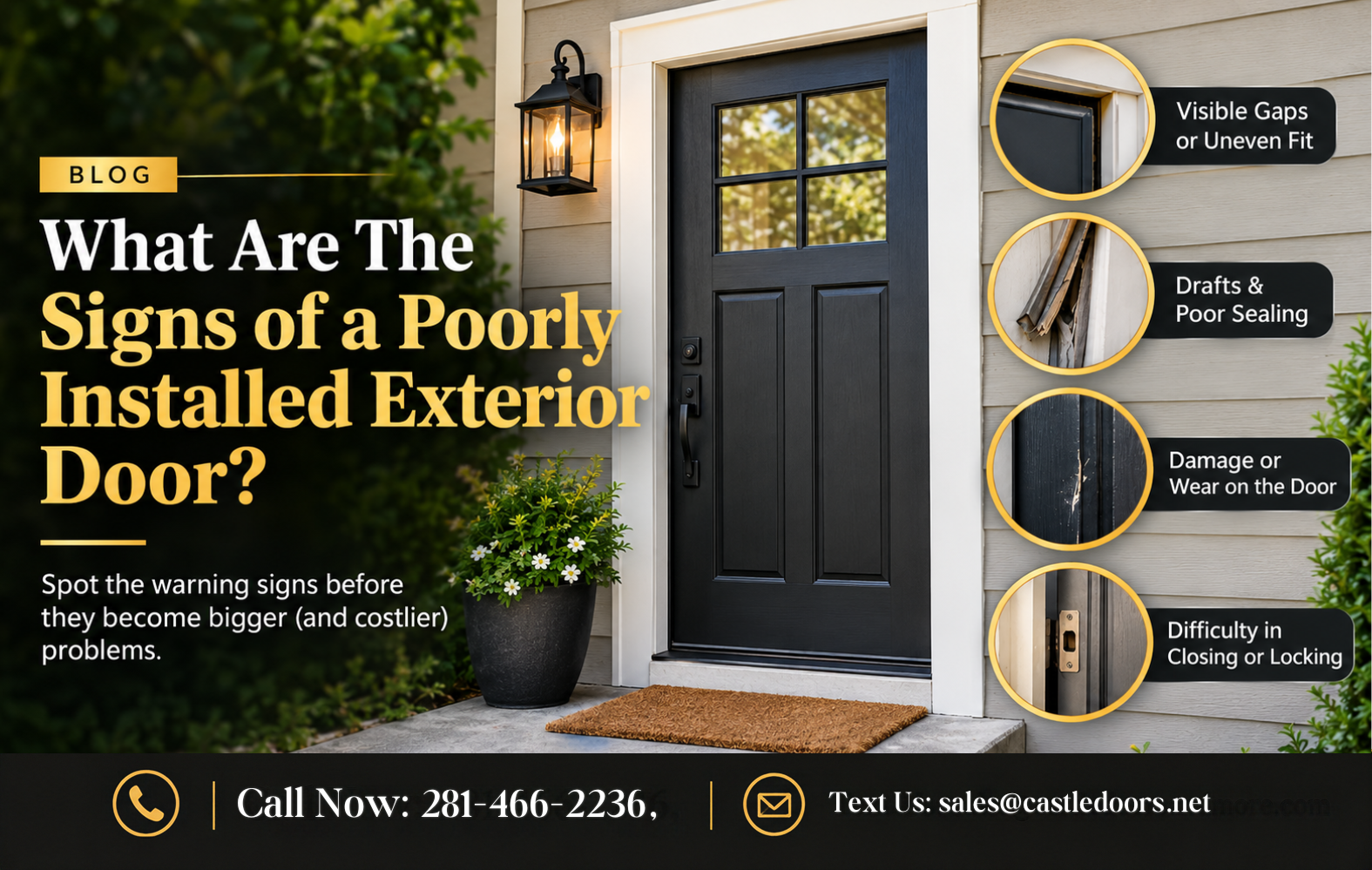
A new exterior door should open smoothly, close securely, seal against the weather, and sit evenly within its frame. When those things do not happen, the problem may not be the door itself—it could be the installation.
Small fitting or alignment issues can sometimes become more noticeable with everyday use. Drafts, uneven gaps, sticking, water around the threshold, or locks that do not line up correctly may all indicate that the door was not installed properly.
Understanding these warning signs can help homeowners identify installation problems before they lead to more significant issues. It can also help determine whether a simple adjustment is needed or whether the frame, threshold, sealing, or installation needs closer attention.
Signs of a Poorly Installed Exterior Door
Common signs of a poorly installed exterior door include uneven gaps around the frame, difficulty opening or closing, rubbing or sticking, misaligned locks, drafts, visible daylight, water around the threshold, loose weatherstripping, and an uneven or unstable door. These problems can indicate issues with alignment, sizing, leveling, sealing, or the installation of the door frame.
1. The Door Is Difficult to Open or Close
One of the easiest signs to notice is a door that does not operate smoothly.
An exterior door should generally open and close without excessive force. If you have to push, pull, lift, or slam the door to get it into position, something may be out of alignment.
A poorly installed door may:
- Rub against the frame or threshold
- Stick at one point during its swing
- Require extra pressure to close
- Swing open or closed unexpectedly
- Become harder to operate as the weather changes
- Fail to sit properly within the frame
A minor adjustment may sometimes correct the issue. However, persistent sticking can indicate that the door, frame, hinges, or threshold was not positioned correctly during installation.
The important point is not to assume that the door itself is defective. The way the complete door system was fitted can have a significant effect on how it operates.
2. The Gaps Around the Door Look Uneven
Look carefully at the space between the door slab and the frame when the door is closed
The gaps should appear reasonably consistent rather than noticeably wider on one side or at one corner. Large or uneven gaps can suggest that the door is not sitting squarely in the opening.
This can happen when the frame has not been properly positioned, leveled, or secured.
Uneven gaps can also affect more than appearance. They may make it harder for weatherstripping to create a consistent seal and can contribute to air leakage or moisture entry.
If the door looks slightly crooked when closed, compare the spacing along the hinge side, latch side, and top of the door. A noticeable difference may justify having the installation inspected.
3. You Can Feel a Draft Around the Door
Feeling outside air around a closed exterior door is another potential warning sign.
A properly installed door relies on several components working together, including the door slab, frame, threshold, weatherstripping, and bottom seal. If these components do not meet correctly, outside air can find a path into the home.
You may notice a draft:
- Around the latch side
- Along the top edge
- Near the hinges
- Beneath the door
- Around the corners of the frame
Drafts do not always mean the door was installed incorrectly. Weatherstripping can deteriorate, thresholds can become damaged, and existing frames can develop problems.
However, if noticeable air leakage appeared immediately after a new installation, the installation and sealing should be checked rather than automatically blaming the door material.
4. Daylight Is Visible Around the Closed Door
A simple visual inspection can sometimes reveal a sealing problem.
With the exterior door fully closed, look around its perimeter from inside the home. If you can see daylight through areas where there should be a seal, there may be an unwanted gap.
Pay particular attention to the corners and the area near the threshold.
Not every small variation in light necessarily means there is a serious installation defect. But obvious gaps can indicate that the door is not sitting correctly, the weatherstripping is not making proper contact, or the frame and surrounding components need adjustment.
This is especially worth checking after a new door has been installed because sealing is part of the installation—not something that should be treated as an afterthought.
5. The Lock or Deadbolt Does Not Line Up Easily
A door can look fine and still have an installation problem if the locking hardware does not align properly.
When you close the door, the latch should meet the strike plate correctly. The deadbolt should also extend into its opening without requiring you to pull, push, or lift the door.
If you have to put pressure on the door to lock it, that can indicate an alignment issue.
Possible causes include:
- The door is not sitting squarely
- The frame is out of alignment
- Hinges need adjustment
- The strike plate is positioned incorrectly
- The opening or door dimensions are not properly matched
Because the locking system is connected to the door’s alignment, repeatedly forcing the lock is not a good long-term solution.
6. The Door Rubs Against the Threshold or Frame
A new exterior door should not routinely scrape against the threshold or jamb during normal operation.
If you hear rubbing or see marks developing along the bottom or sides of the door, check where the contact is occurring.
The problem could involve the door’s position, hinges, frame alignment, threshold height, or other installation details.
This is particularly important with heavier exterior doors. A door that is not correctly supported or aligned can place additional stress on hinges and hardware.
If the rubbing appeared immediately after installation, it is sensible to have the installer inspect the fit before making significant modifications yourself.
7. Water Appears Around the Threshold After Rain
Water around an exterior door should never be ignored.
Rainwater can enter through problems involving the threshold, weatherstripping, exterior seal, flashing, surrounding structure, or the way the door assembly was installed.
A single instance of moisture does not automatically prove that the door was installed incorrectly. However, repeated water entry after rainfall deserves investigation.
Look for:
- Moisture near the bottom corners
- Water stains around the trim
- Damp flooring close to the doorway
- Deteriorating materials near the threshold
- Gaps in exterior sealant
- Water appearing after wind-driven rain
Exterior door installation involves more than attaching a door to hinges. The opening needs to be properly sealed and protected from the elements.
8. The Weatherstripping Is Loose or Does Not Contact Properly
Weatherstripping is designed to close the small space between the door and frame when the door is shut.
If it is loose, compressed unevenly, missing sections, or not making proper contact, the door may not seal effectively.
Check whether the weatherstripping:
- Sits continuously around the frame
- Makes contact with the closed door
- Is securely attached
- Has obvious gaps or damage
- Appears excessively compressed in one area
Weatherstripping alone is not responsible for every sealing problem. The frame, door position, threshold, and installation all contribute to the finished seal.
This is why simply adding more sealant or replacing one strip may not solve a larger fitting problem.
9. The Threshold Feels Loose or Looks Improperly Fitted
The threshold is an important part of an exterior door assembly. It helps form the transition between the interior and exterior while contributing to the bottom seal.
If the threshold moves, looks uneven, or has visible gaps around it, the installation deserves closer attention.
A poorly fitted threshold can contribute to:
- Drafts
- Water entry
- Uneven door operation
- Poor contact with the door sweep
- Deterioration around the doorway
The threshold should work together with the door bottom, frame, and weather seals rather than functioning as an isolated component.
10. The Door or Frame Looks Out of Square
Sometimes the problem is visible before you even operate the door.
Stand several feet away and look at the closed door from inside and outside. Does it appear level? Are the vertical lines reasonably straight? Does the top edge appear noticeably angled?
A door opening that is out of square can make proper installation more difficult. Conversely, incorrect installation can create alignment problems within an otherwise suitable opening.
The installer may need to assess the rough opening, framing, shims, threshold, jambs, and door unit to determine where the problem originates.
This distinction matters because replacing the door alone may not correct an issue that actually involves the opening or frame.
How Poor Installation Can Affect Door Performance
An exterior door is a system rather than just a slab of material.
The door, frame, hinges, threshold, weatherstripping, hardware, and exterior sealing all contribute to the finished result. This is why professional door installation involves more than simply attaching the door to the frame.
For example, a door can be made from a durable material but still perform poorly if it is not positioned correctly. A small alignment problem can affect the way the latch engages. An improperly sealed threshold can contribute to moisture entry. An uneven frame can prevent weatherstripping from contacting consistently.
Installation quality can therefore influence everyday operation, weather resistance, comfort, and the long-term condition of the doorway.
Why Texas Weather Makes Proper Door Installation Important
Exterior doors are exposed to heat, humidity, rainfall, sunlight, and changing outdoor conditions. These factors can make proper fitting and sealing particularly important.
In the Houston area, for example, exterior doors need to deal with humid conditions and periods of heavy rainfall. A door that is not properly sealed can provide opportunities for outside air or moisture to enter.
Temperature and humidity changes can also affect some door and framing materials differently. That does not mean every operating change is caused by poor installation, but it makes proper initial fitting and appropriate sealing important.
The goal is to create an exterior door assembly that works as a complete system rather than relying on the door material alone.
Can a Poorly Installed Door Be Fixed?
Not every installation problem means the entire door needs to be replaced.
Depending on the cause, a professional may be able to correct the issue through adjustments to the hinges, latch, threshold, weatherstripping, alignment, or other components.
However, more extensive work may be necessary if the problem involves:
- A damaged or unsuitable frame
- Structural deterioration around the opening
- Incorrect measurements
- Significant water intrusion
- An improperly sized door
- Serious alignment problems
- Inadequate sealing around the opening
If the frame itself is part of the problem, it is worth determining whether it can be reused or needs replacement. Factors such as structural condition, alignment, dimensions, hinges, hardware, and weather sealing all need to be considered when evaluating an existing door frame.
The right solution depends on identifying the source of the problem first.
If you are unsure whether the issue involves the door itself or the installation, a professional assessment can help distinguish between the two.
When Should You Have an Exterior Door Inspected?
Consider having the installation checked if you notice persistent problems rather than a one-time adjustment issue.
Professional assessment can be particularly useful when:
- The door continues to stick
- The lock repeatedly fails to align
- Drafts remain after installation
- There are visible gaps around the frame
- Water appears near the threshold
- The frame appears uneven or damaged
- The weatherstripping does not seal properly
- The door rubs against the frame or threshold
- You are unsure whether the existing frame is suitable
A proper inspection should look beyond the door slab and consider the entire opening.
Castle Doors & More’s door installation process includes an inspection before ordering a door, allowing the existing frame and surrounding structure to be evaluated before installation.
Common Mistakes That Can Lead to Exterior Door Installation Problems
Choosing a Door Without Checking the Existing Opening
A replacement door needs to be compatible with the opening and surrounding components. Assuming that every door will fit an existing frame can create problems with dimensions, hinges, hardware, and sealing.
Focusing Only on Appearance
A door may look attractive but still perform poorly if it is not aligned or sealed correctly.
Ignoring the Threshold
The bottom of the doorway plays an important role in sealing and water management. It should be checked as part of the complete installation.
Covering Gaps With Sealant
Sealant can be useful in the appropriate locations, but it should not be used to hide a fundamental fitting or alignment problem.
Ignoring Small Operating Problems
A door that rubs or requires unusual force every day should not simply be accepted as normal. Small problems can sometimes be easier to correct when addressed early.
Key Takeaways
- A poorly installed exterior door may stick, rub, or require excessive force to operate.
- Uneven gaps, visible daylight, and persistent drafts can indicate fitting or sealing problems.
- Locks and deadbolts should align without forcing the door into position.
- Water around the threshold should be investigated rather than ignored.
- The frame, threshold, weatherstripping, hinges, and hardware all contribute to proper door performance.
- Not every installation issue requires a complete replacement; the correct solution depends on the underlying cause.
FAQs
How Do I Know if My Exterior Door Was Installed Correctly?
A properly installed exterior door should open and close smoothly, sit evenly within the frame, latch and lock without excessive force, and have consistent contact with the weatherstripping. You should not normally see obvious unintended gaps or feel persistent drafts around the perimeter. The threshold should be secure, and there should be no unexplained water entry around the bottom of the doorway. If several of these problems appeared immediately after installation, having the complete door assembly inspected can help determine whether the issue is related to installation, the frame, or another component.
Why Is My New Exterior Door Hard to Close?
A new exterior door that is difficult to close may have an alignment, hinge, frame, threshold, or weatherstripping issue. The door may not be sitting squarely within the opening, or the locking hardware may not be positioned correctly. Changes in humidity can affect some materials, but a persistent problem immediately after installation should not automatically be considered normal. Check whether the door is rubbing against the frame or threshold and whether the gaps around the perimeter appear uneven. An installer can assess the complete assembly and determine whether an adjustment is sufficient.
Can a Poorly Installed Door Cause Drafts?
Yes, an improperly fitted or sealed exterior door can contribute to drafts. Air may enter through gaps around the door, frame, threshold, or weatherstripping. However, drafts can also develop because weatherstripping has deteriorated or an older frame has shifted or become damaged. If the draft appeared after a recent installation, the installation and sealing should be checked. Proper door performance depends on the complete assembly rather than the door slab alone, so replacing weatherstripping without addressing an underlying alignment or fitting problem may not fully resolve the issue.
Can a Poorly Installed Exterior Door Cause Water Damage?
It can contribute to water intrusion if the door assembly is not properly fitted or sealed. Potential problem areas include the threshold, exterior seal, frame, flashing, and surrounding structure. Water that repeatedly enters around an exterior doorway can eventually affect nearby materials, so it should not be ignored. However, water entry does not automatically prove that the door installation is at fault. Existing drainage, structural conditions, and surrounding construction can also play a role. If moisture appears after rainfall, the doorway should be inspected to identify where the water is entering.
Should I Replace the Door if It Was Installed Incorrectly?
Not necessarily. Some installation problems can be corrected through adjustments to the hinges, alignment, threshold, weatherstripping, hardware, or other components. Replacement may become necessary if the door is incorrectly sized, damaged, incompatible with the opening, or if the surrounding frame or structure has significant problems. The best approach is to identify the underlying cause before deciding on replacement. A professional assessment can help determine whether the existing door and frame can be corrected or whether a more extensive replacement is appropriate.
When Should I Contact a Professional About a Door Installation Problem?
Consider contacting a professional when problems persist despite normal use or basic adjustments. This includes repeated sticking, uneven gaps, drafts, water around the threshold, misaligned locks, loose weatherstripping, or visible frame problems. Professional assessment is particularly useful when it is unclear whether the issue involves the door, frame, threshold, or surrounding opening. Addressing the cause rather than simply treating the symptom can help prevent recurring problems and ensure that the exterior door performs as intended.
Conclusion
A poorly installed exterior door does not always announce itself with an obvious defect. Sometimes the warning signs are small—a door that rubs, a lock that needs extra pressure, a draft around one corner, or an uneven gap along the frame.
These details are worth paying attention to because an exterior door needs more than an attractive design. The door, frame, threshold, hardware, weatherstripping, and exterior sealing all need to work together.
If your exterior door continues to stick, leak air, allow moisture inside, or show alignment problems after installation, consider having the complete assembly assessed. Identifying the source of the problem can help determine whether a simple adjustment or more extensive work is appropriate.
For homeowners planning a new exterior door project, professional installation can help ensure the door is properly fitted, aligned, sealed, and integrated with the existing opening.


